NTI Wash & Go Laundromat |Service design|
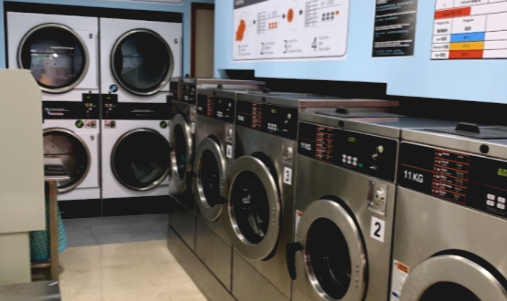
Improving the service design of a neighbourhood self-service laundromat.
Research
Research goal: How might we save users time and improve their overall experience using the laundromat service.
Two research methods, observational and attitudinal was used in the conduct of research.
Target participant groups include adults aged 26 – 55 and youths aged 13 – 25.
Core parts of the service business
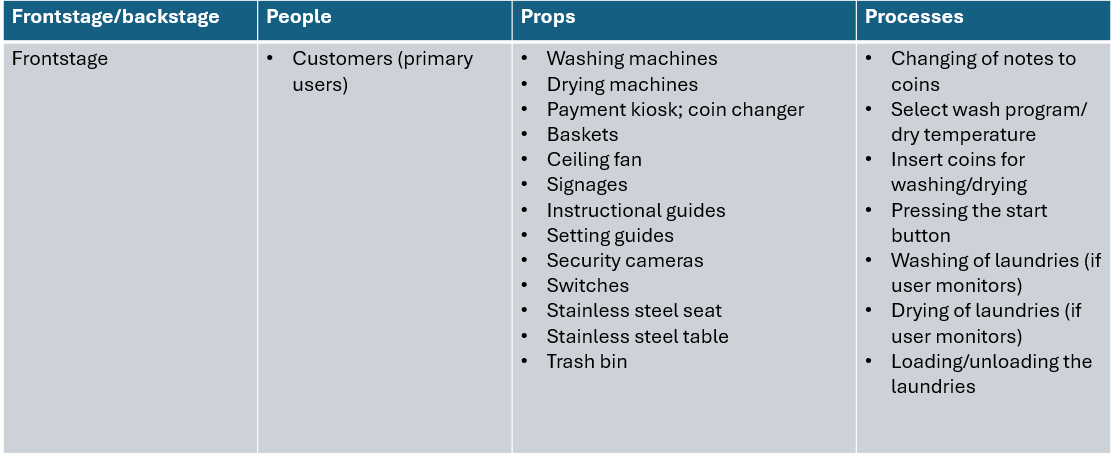
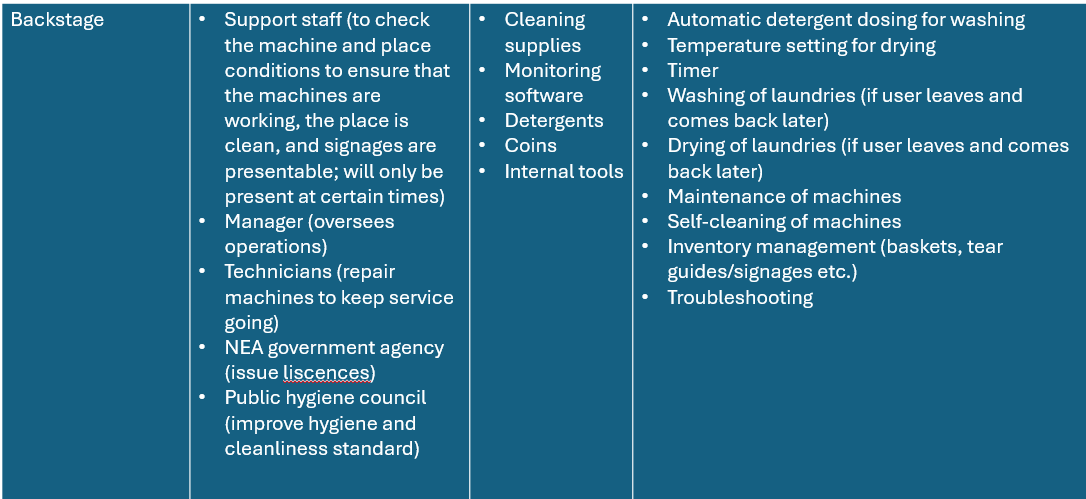
Touchpoints:
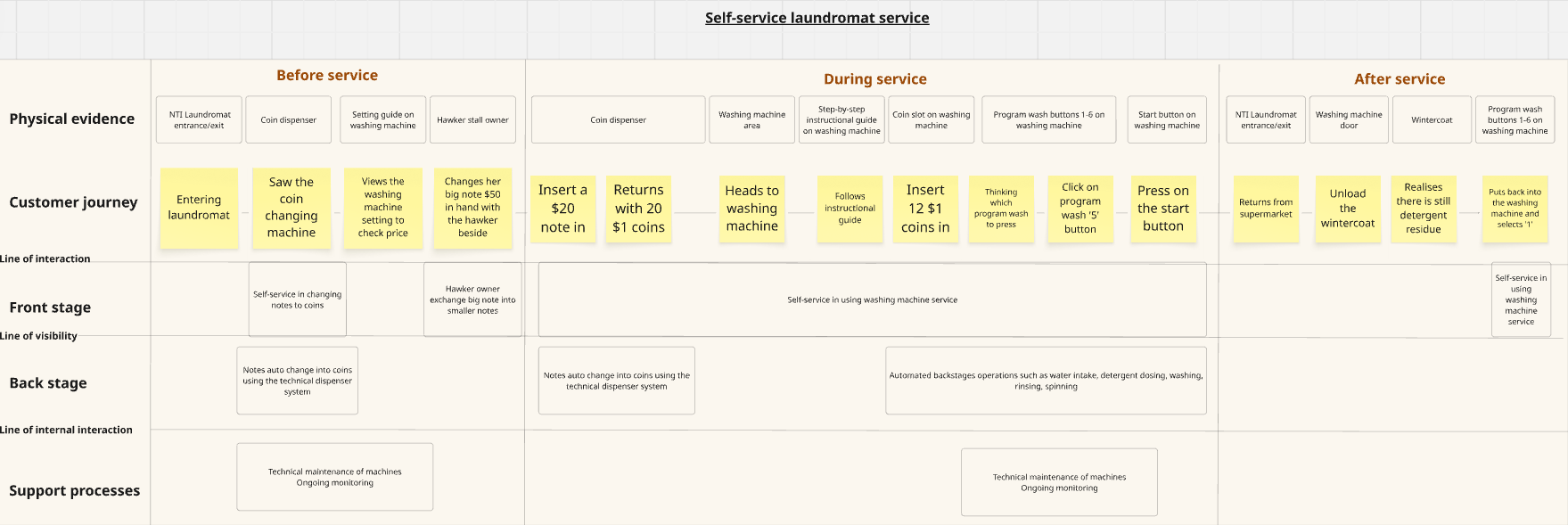
Steps into the laundromat, --> Changes notes into coins, --> Approaches the washing machine, --> Loads laundry into the washing machine, --> Views the available settings and chooses one, --> Inserts coins based on the price of the chosen setting, --> Selects a program wash, --> Presses the start button, --> Gets a basket, --> Unload laundries into baskets, --> Approach the drying machine, --> Load the laundry into the drying machine, --> Selects a temperature setting, --> Insert coin, --> Push the start button, --> Collect laundry once time is up, --> Leave the laundromat
Research finding
Attitudinal
Users generally felt slightly anxious or uncertain during their initial use due to unfamiliar machine settings and unclear program labels. Although instructions were provided, small font sizes and technical terms (such as “ozone”) caused confusion, leading users to rely on assumptions when selecting wash programs. Despite these minor issues, the overall experience was manageable, with users able to operate the machines independently in a clean and well-lit environment. Improvements such as clearer program descriptions, larger instructional signage, multilingual explanations, and cashless payment options could enhance usability and convenience.
Observational
Both users were able to navigate and operate the laundromat independently by following the provided instructions and signage. However, moments of hesitation were observed when selecting wash programs, as both relied on assumptions due to unclear labeling. Despite minor uncertainty, they remained calm and comfortable within the environment, making use of available facilities while waiting. Overall, the space supports self-directed use, but clearer program descriptions could reduce hesitation and improve user confidence.
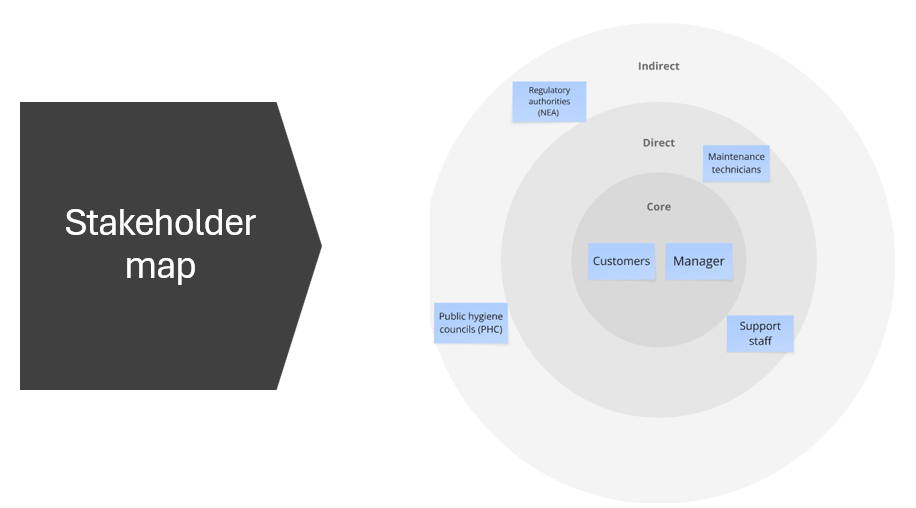
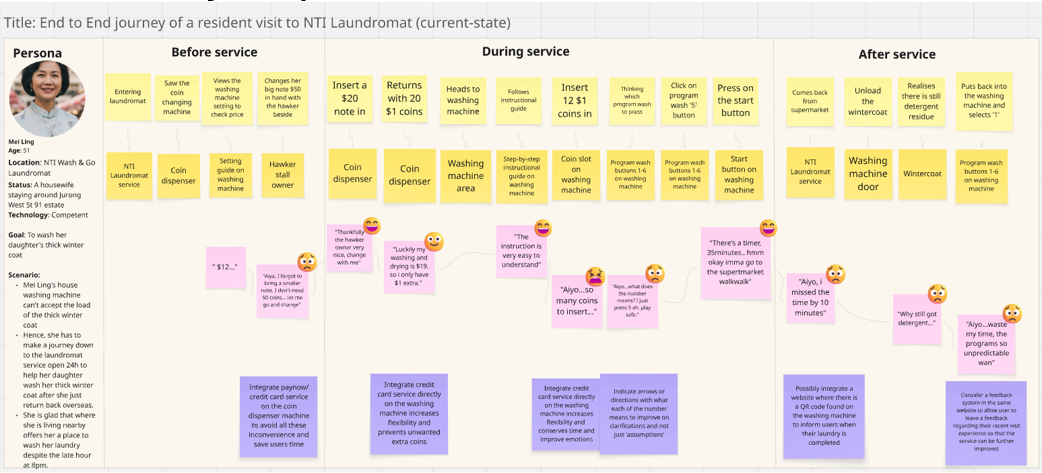
Journey map
Service blueprint
Key insights
I found that users experienced inconvenience when exchanging large notes for coins, as there is no return for change. They also found it difficult to grasp the meanings behind the numbered wash programmes, which confused them when choosing and, in some cases, necessitated rewashing their clothes, leading to wasted time.
Final idea outcomes
Integrate Paynow/ credit card service on the coin dispenser machine to avoid all these inconveniences and save users time.
Indicate arrows or directions with what each wash numbers means to improve on clarifications and not just 'assumptions’.